

Is Whot Like Uno? What's Actually Different (2026 Guide)
Whot and Uno are cousins, not twins. Here's exactly how the Nigerian card classic Whot compares to Uno — the shapes, the special cards, and which one to play first.
Is Whot Like Uno? What's Actually Different (2026 Guide)
If you grew up playing Whot around a Naija dining table and then met Uno at a friend's house (or the other way around), you probably noticed something familiar right away. The two games rhyme — but they are not the same game wearing a different hat. Here is exactly where they overlap and where they split.
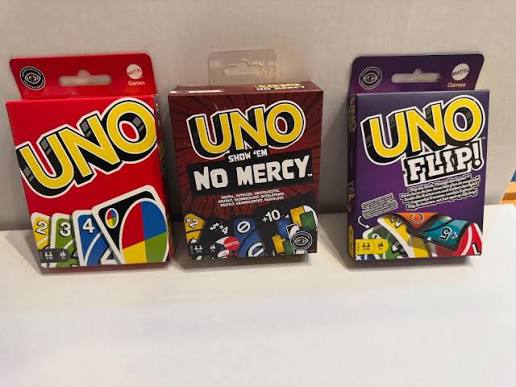
This guide compares Whot with Uno. FateRound has real Whot and its own Uno-style card game called Match Up — same colour-and-number matching, same wilds and draw penalties, our own cards.
The short answer
Yes, Whot and Uno are close cousins. Both are shedding games — match the top card, play a wild when you're stuck, and race to empty your hand first. But Whot uses shapes instead of colours, has two different draw penalties instead of one, and came decades before Uno.
Which came first?
Whot is older. It was invented in England in 1935 by Henry Ernest Dudeney (yes, the puzzle guy) and popularized in Britain through the 1950s, where it eventually faded from everyday play. It found a second life in Nigeria and across West Africa, where it became — and remains — one of the most-played card games in the region.
Uno came later, created in the United States in 1971 by Merle Robbins. It borrowed the same shedding-game DNA (Crazy Eights is the shared ancestor both games trace back to) but built its own identity around colour-matching instead of shapes.
So the family tree looks like: Crazy Eights → Whot (1935) and, separately, Crazy Eights → Uno (1971). They are siblings by a common parent, not one copying the other.
Matching: shapes vs colours
This is the most visible difference.
- Whot uses five shapes: circle, triangle, cross, square, and star. Cards are numbered 1–14 within each shape, and you match the top card by shape or number.
- Uno uses four colours: red, yellow, green, blue. Cards are numbered 0–9 within each colour, and you match by colour or number.
Functionally identical logic — shape swapped for colour, that's it.
The wild card: WHOT vs Wild
- Whot's wild is the WHOT card, numbered 20. Play it anytime and call the shape everyone must match next.
- Uno's wild is the Wild card. Play it anytime and call the colour everyone must match next.
Same mechanic, same escape hatch when your hand doesn't fit the pile.
The draw penalties: this is where it gets interesting
Here's the biggest structural difference. Uno has one stackable draw penalty tier; Whot has two, and they don't mix.
| Whot | Uno | What it does |
|---|---|---|
| Pick 2 (the 2 card) | Draw 2 | Next player draws 2 and is skipped, unless they can play the same penalty card to pass it on |
| Pick 3 (the 5 card) | Draw 4 (Wild Draw Four) | Next player draws 3 (Whot) or 4 (Uno) |
The catch in Whot: Pick 2 and Pick 3 stacks never mix. You can only block a Pick 2 with another 2, and a Pick 3 with another 5 — you cannot answer one with the other, and you cannot escape either by playing WHOT. Uno's Draw 4 is also a wild card that lets you change the colour, which Whot's Pick 3 does not do.
The cards Uno doesn't have
Two Whot special cards have no direct Uno equivalent:
- Hold On (the 1 card) — play it and take another turn immediately. Chain a few in a row and you can dump several cards before anyone else moves. Uno's closest cousin is the Skip card, but Skip only blocks the next player — it doesn't hand you an extra turn the way Hold On does.
- General Market (the 14 card) — play it and every other player at the table draws a card while you go again. This has no Uno equivalent at all; Uno's penalties only ever hit the next player, never the whole table at once.
Scoring at the end
- Whot scores by card face value if the round is blocked or timed — lowest total in hand wins, and the WHOT card itself counts as 20 points against you if you're stuck holding it.
- Uno scores similarly at the end of a round — the winner gets points equal to the value of cards left in everyone else's hands (Draw 4 and Wild worth 50, action cards worth 20, number cards worth face value).
Same idea — don't get caught holding cards — with different numbers behind it.
So which one should you play?
If you already love Uno, Whot will feel instantly familiar within the first hand — you'll just need to learn General Market and Hold On, and get used to two separate penalty stacks instead of one. If you grew up on Whot and have never tried a Uno-style card game, the transition the other way is even easier, since the colour-matching version strips a couple of the trickier rules out.
Honestly, the best answer is to play both. Fate Round has real Naija Whot and Match Up (our Uno-style card game), free, in the browser — no app, no sign-up, no physical deck to lose a card from.
Ready to see the difference for yourself? Play Whot free on Fate Round or play Match Up — our Uno-style card game — free on Fate Round. 2 to 6 players, no download, no account.